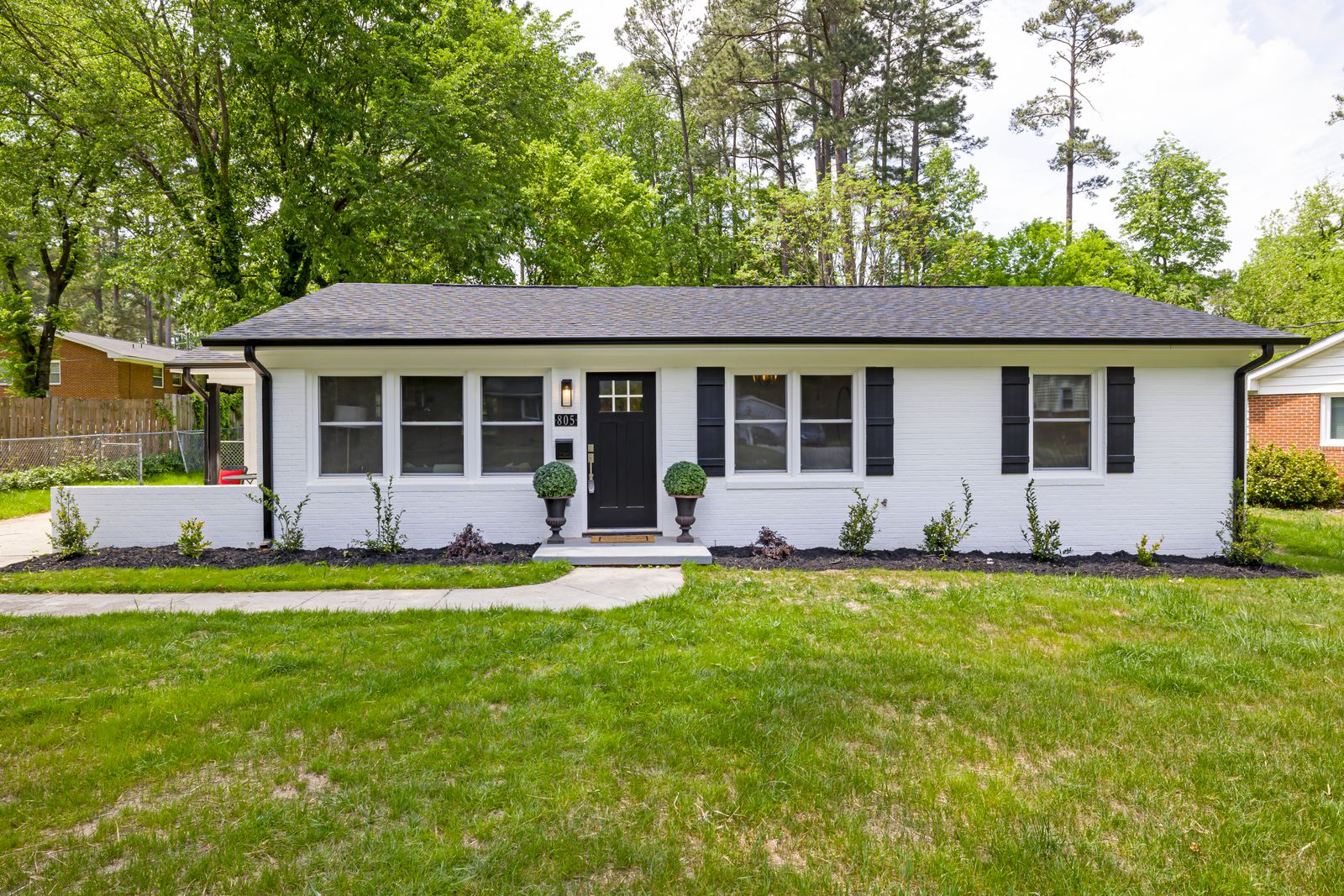
Fix and flip financing usually requires a credible property plan, a documented renovation budget, enough available cash to execute it, and a realistic repayment strategy. The exact credit, experience, leverage, and entity requirements depend on the program. Prepare the acquisition and renovation as one project, then show how funds move from closing through completion. A proposed after-repair value alone does not establish that the project can be financed or completed.
What to know before you start
- Separate the acquisition advance from money reserved for future renovation draws.
- Document the work, schedule, available cash, and proposed exit before requesting terms.
- Evaluate the entire project budget, including costs that the lender may not finance.
Start with the property and the intended use
A fix and flip loan supports an investment project with a defined completion and repayment plan. The Mortgage Calculator describes acquisition and rehabilitation financing with a sale or refinance exit. Whether a particular property fits depends on its condition, location, legal use, construction scope, and the selected program.
Prepare a short project brief: address, purchase contract, current condition, intended finished condition, estimated renovation duration, and proposed sale price or rent. Add photographs that show both the opportunity and the difficult work. A roof replacement and cosmetic updates present a different execution problem from a foundation repair, major addition, or conversion requiring new approvals. Identify those differences before comparing financing proposals.
Prepare the borrower and ownership file
Property value is one part of the review. Ask which borrower, guarantor, liquidity, credit, and prior-project documents the program requires. If an entity will own the property, confirm the proposed vesting before ordering title work and insurance. Names on the contract, entity documents, bank accounts, and application should be reconcilable.
Create an accurate experience schedule instead of a general claim that you have completed similar projects. For each relevant property, list your role, purchase and sale dates, work performed, and outcome. If this is your first project, say so and explain the contractor and oversight arrangement. That gives the financing team something concrete to evaluate.
- Current ownership and entity information, including authorized signers.
- Evidence of available funds, with an explanation of transfers or borrowed contributions.
- A property and project history that distinguishes ownership experience from contractor experience.
Turn the renovation idea into a usable scope
A scope of work should connect each improvement to a cost, responsible party, and completion milestone. Published lender guidance illustrates how a scope supports feasibility review and draw planning. The selected program determines its own documentation and disbursement requirements.
Build your own scope around trades and measurable deliverables. Replace 'update bathrooms' with the number of bathrooms, fixtures, plumbing work, finishes, and labor allowance. Mark items that require permits, engineering, specialist inspections, or long delivery times. Keep an explicit contingency rather than hiding spare money in unrelated line items. Reconcile contractor bids to the scope so the same work is neither omitted nor counted twice.
Calculate cash needed beyond the down payment
Illustrative planning example: a property costs $240,000 and the renovation budget is $60,000. A hypothetical proposal advances $204,000 toward acquisition and reserves $54,000 for approved renovation draws. The purchase contribution is $36,000 and the unfunded renovation portion is $6,000. Those figures alone do not describe peak cash needs.
Suppose closing costs are $9,000 and a separate contingency reserve is $8,000. Assume the $6,000 permanent renovation contribution is already paid or committed, and a separate $15,000 of lender-reimbursable work must be paid before the first draw. If those needs overlap in time, the investor needs access to $74,000: $36,000 + $6,000 + $9,000 + $8,000 + $15,000, before ongoing carrying costs. The $15,000 is a temporary draw bridge for different work, not another permanent contribution or a second count of the $6,000. Later reimbursements may replenish cash. These are illustrative planning assumptions, not program terms.
Make the exit and schedule reviewable
Build a calendar that includes due diligence, permitting, construction, inspection, marketing, and closing. Add a slower completion scenario. If the intended exit is a sale, account for selling costs and a lower sale price. If it is a rental refinance, investigate the future rental loan before committing to the bridge loan.
Request a written explanation of maturity, extension conditions, draw procedures, interest calculation, and payoff charges. An extension should not be treated as automatic. Prepare two practical questions for the initial review: what information could change the proposed loan amount, and what conditions must be satisfied before the first renovation draw? Those answers make a term sheet more useful than its headline leverage figure alone.
Common questions
Can a first-time flipper request financing?
Yes, an inquiry can be reviewed, but program treatment of first-time investors varies. Present your actual experience, contractor support, project complexity, and available funds. Do not assume terms advertised for experienced borrowers apply.
Does financing the renovation eliminate the need for cash?
No. A financed renovation may still involve holdbacks, reimbursement timing, costs outside the approved budget, and carrying expenses. Ask how the first phase is funded and calculate the lowest projected cash balance.
Is the after-repair value an approval?
No. It is a valuation assumption about the completed property. The lender must also evaluate the borrower, current collateral, scope, financing structure, and repayment plan under the chosen program.
Sources & context
Published by Mortgage Calculator Company LLC d/b/a The Mortgage Calculator, NMLS #2377459. This guide is general educational information. Examples are illustrative, and program availability, qualification, and final terms require an individual review.
- The Mortgage Calculator: Fix and Flip Loans ↗
- Kiavi: Fix-and-Flip Scope of Work ↗
- Kiavi: How the Fix-and-Flip Draw Process Works ↗
Published November 11, 2026. Reference sources checked for this edition. For a correction or question, contact the company.